![[personal profile]](https://www.dreamwidth.org/img/silk/identity/user.png) chroniclesofabookworm
chroniclesofabookworm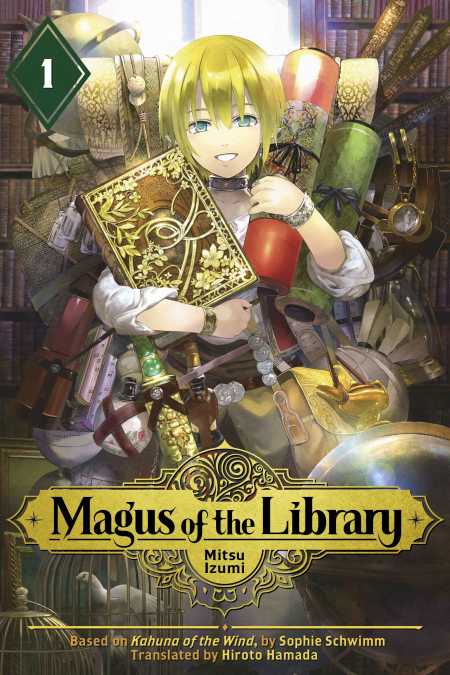
SERIES: 圕の大魔術師 [Toshokan no Daimajutsushi] (#1)
RELEASES: July 9, 2019 by Kodansha Comics
GENRE: Adventure, Fantasy
AGE RANGE: Teen
RATING: 3 out 5
SYNOPSIS: A story about a poor boy swept away by a kind library mage and the (literal) magic of reading, Magus of the Library is a beautifully-drawn, spirited fantasy adventure, like a Fullmetal Alchemist for all ages! The Magic of the Written Word In the small village of Amun lives a poor boy named Theo. Theo adores books, but because of his pointed ears and impoverished life, he isn’t allowed to use the village library. As he endures the prejudice and hatred of the village, he dreams of going where such things don’t exist: Aftzaak, City of Books. But one day, Theo chances to meet a Kafna–a librarian who works for the great library of Aftzaak–and his life changes forever…
REVIEW: An enchanting fantasy adventure about a poor boy swept away by the (literal) magic of reading, Magus of the Library is like a Fullmetal Alchemist for all ages! There lives a poor boy named Theo in the small village of Amun. Theo loves books, but the village library won't let him in because of his pointed ears and poverty. Despite the prejudice and hatred of his village, he dreams of going somewhere where such things do not exist: Aftzaak, City of Books. One day, Theo meets Kafna, a librarian who works at the great library of Aftzaak, and his life is forever changed.
This is more of a prequel or an extended prologue than anything else. Reading the blurb makes you feel as if you've read the whole story. It spends most of this book waxing poetic about the inherent amazingness of books and librarians. The story is setting up for something grand, but it doesn't fully deliver in this volume. The focus on Theo's struggles and dreams is compelling, but the pacing falls short, leaving the reader to crave more action and depth.
My first impression of this book is that it represents people... in a weird way? The protagonist is pale and looks like an elf, while everyone except the librarians has darker skin tones and is human. Manga tries to paint this picture of hostility and abuse towards the boy, without explaining why we should accept such abuse. Even more so when it completely contradicts how such problems already plague our own world? Apparently, a stern talking to from a librarian is all it takes to cure racism.
The idea is too idealistic. Although it is fantasy, the framework for discrimination is flimsy, so why create it? This series will ultimately portray this pale boy as a hero, surpassing his origins. This poses a problem.
This world's magic system isn't explained very well, and I have no idea how it works. Izumi adds magic and drama to the divisions of librarian department jobs. Even though repairing a book isn't as fast or as high stakes as you might think, I appreciate the effort put into making archival work look good.
I also have a minor criticism of this book: it confuses libraries with archives and perpetuates the concept that all books are sacred. Sorry, but no. The conflation of libraries and archives undermines the unique roles of each. Libraries are designed for public access and circulation, while archives prioritize preservation and restricted access. This oversight detracts from the otherwise compelling portrayal of archival work and perpetuates a romanticized, inaccurate view of the field of library science.
This distinction is crucial because it highlights the different priorities and functions of each institution. Archives are meant to preserve rare and unique materials for future generations, while libraries aim to make information accessible to the public. By blurring these lines, the book risks misrepresenting the critical differences between the two.
It's hard to decide if I want to continue reading this series. My favorite part of the story is the art, but the remaining elements are lackluster. It may be worth a shot to see if Volume 2 improves, but I doubt it.
